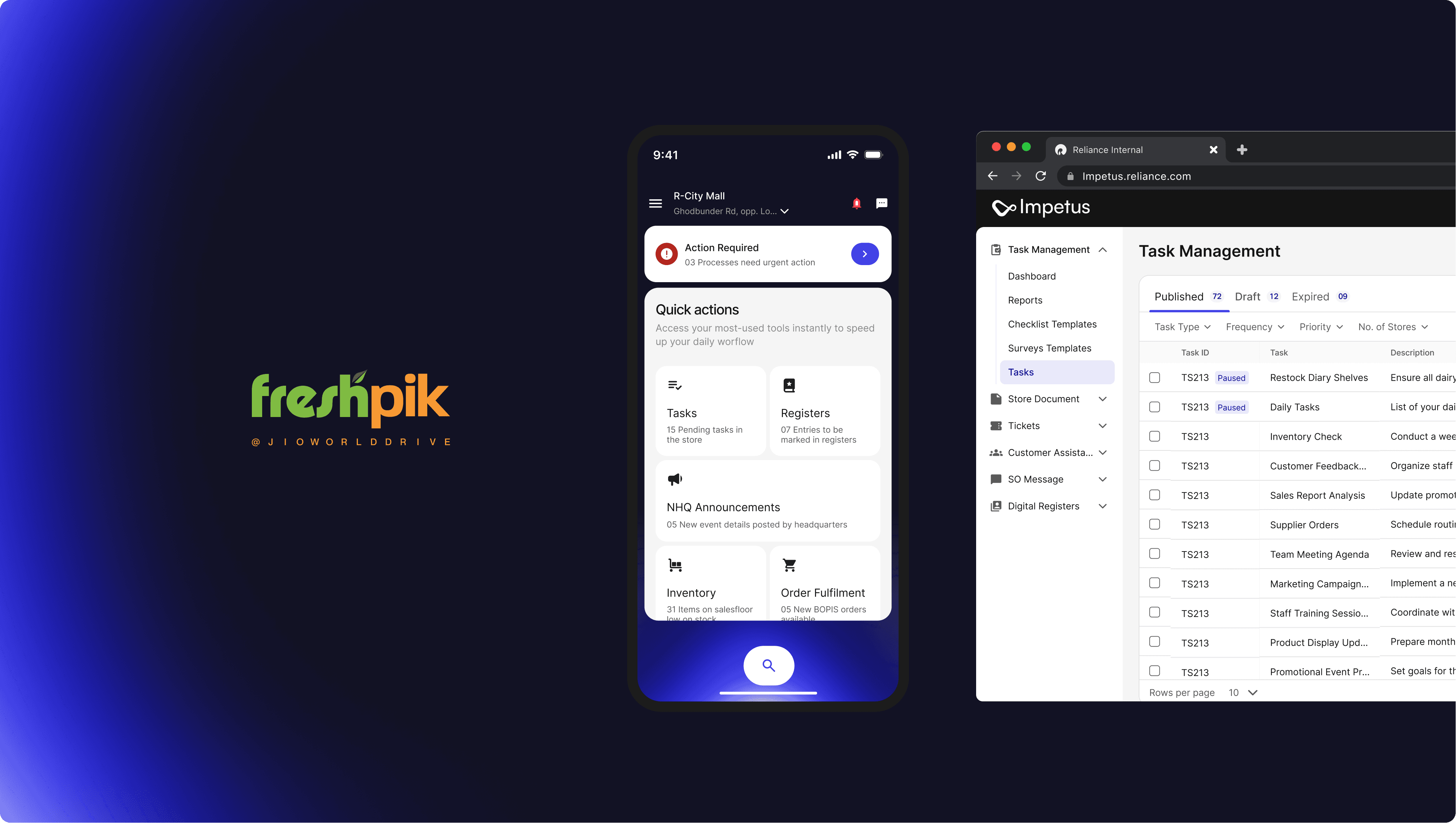
Pulse Point: Store management platform for Freshpik for bringing calm in chaotic workflows
Pulse Point: Store management platform for Freshpik for bringing calm in chaotic workflows
My Role
Worked as a Product designer with 2 of my teammates. Later lead the project as a design manager
Collaborators
Product Owner, Developers, QA Team and Content Writer
Design Timeline
3 Month
(Dec'24 - Feb'25)
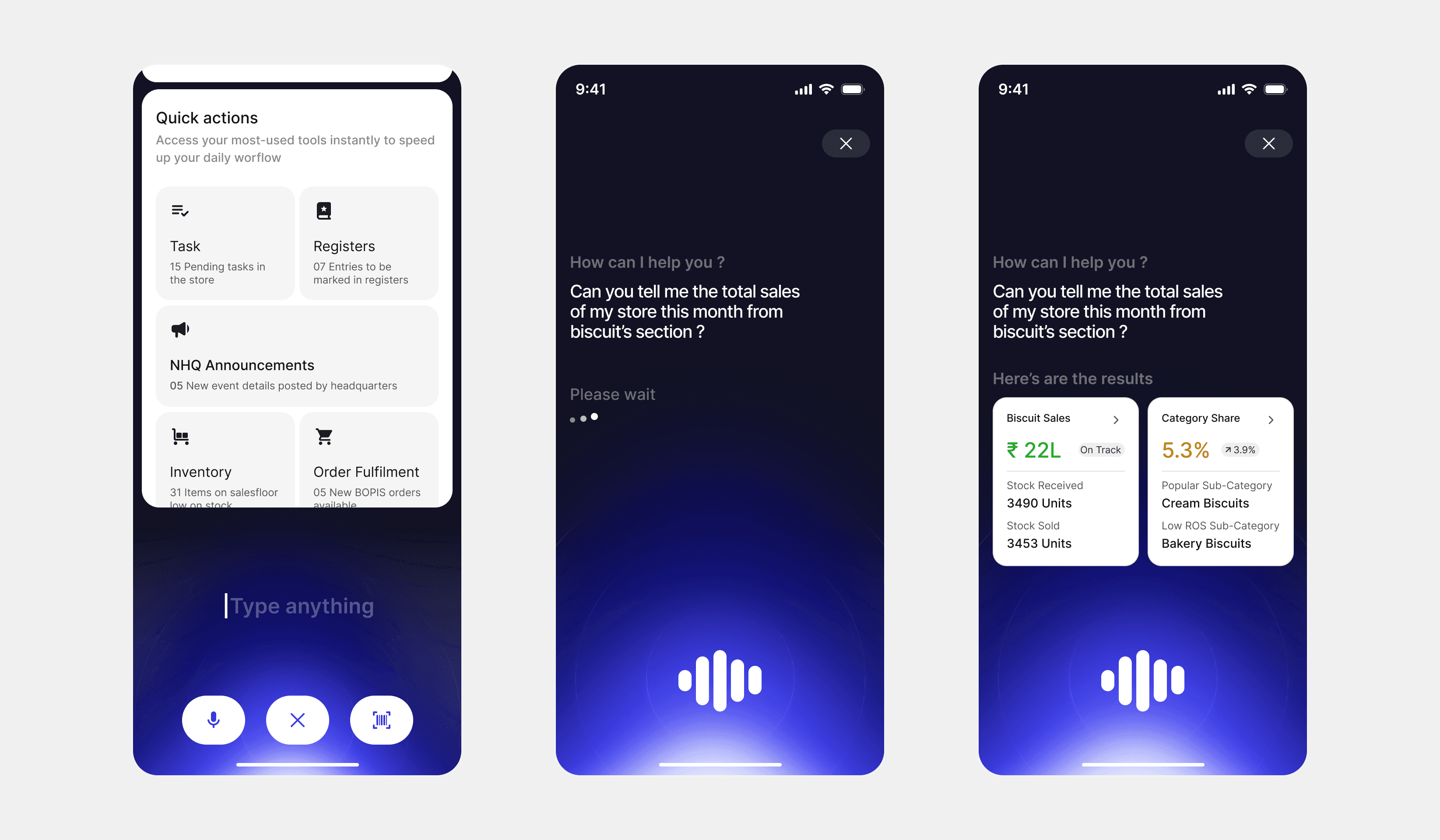
We introduced a multilingual AI voice assistant to help users access insights and perform actions effortlessly through natural speech. This removed language and navigation barriers, allowing store staff to get answers or complete tasks hands-free and instantly, even during busy operations.
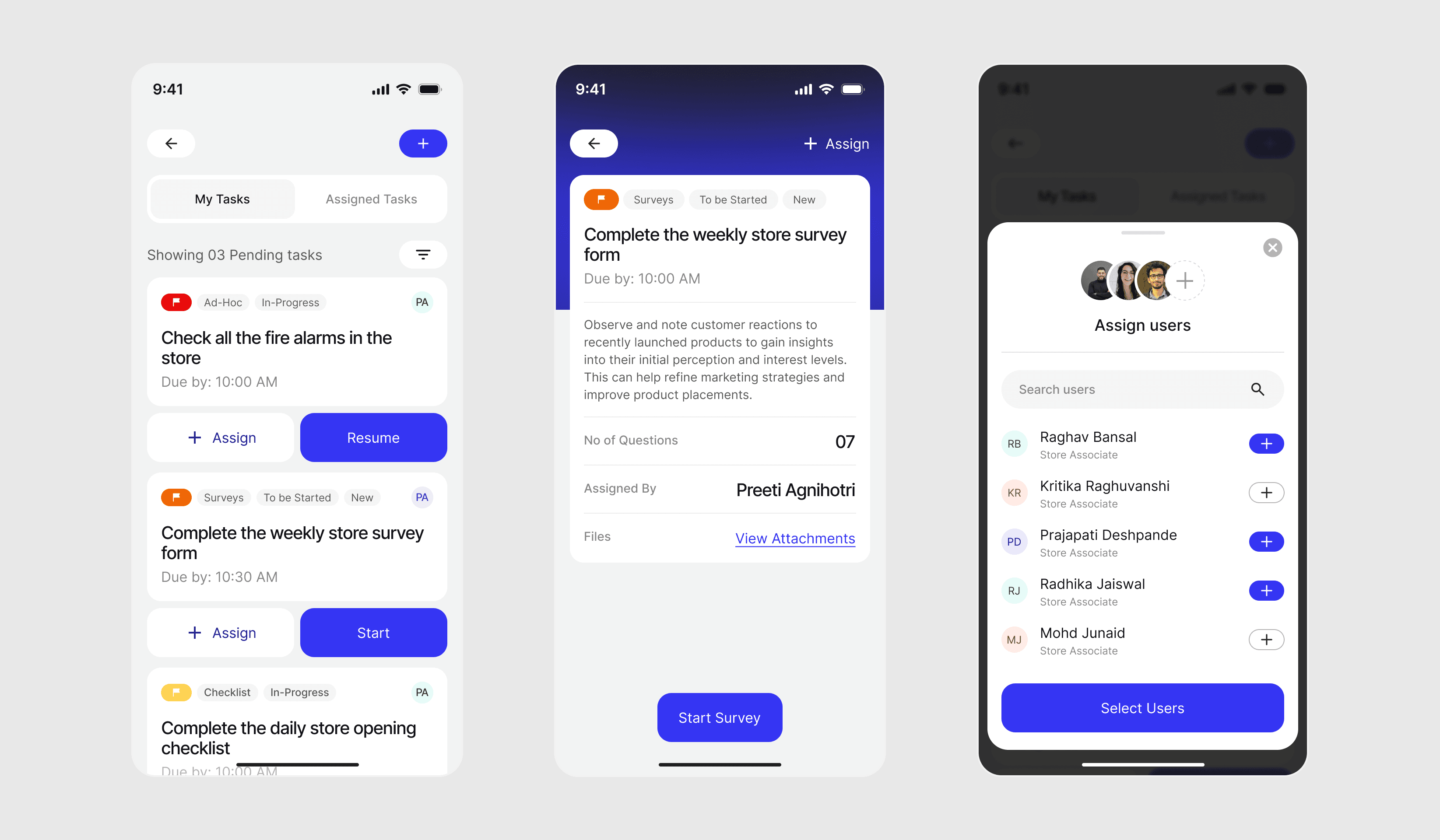
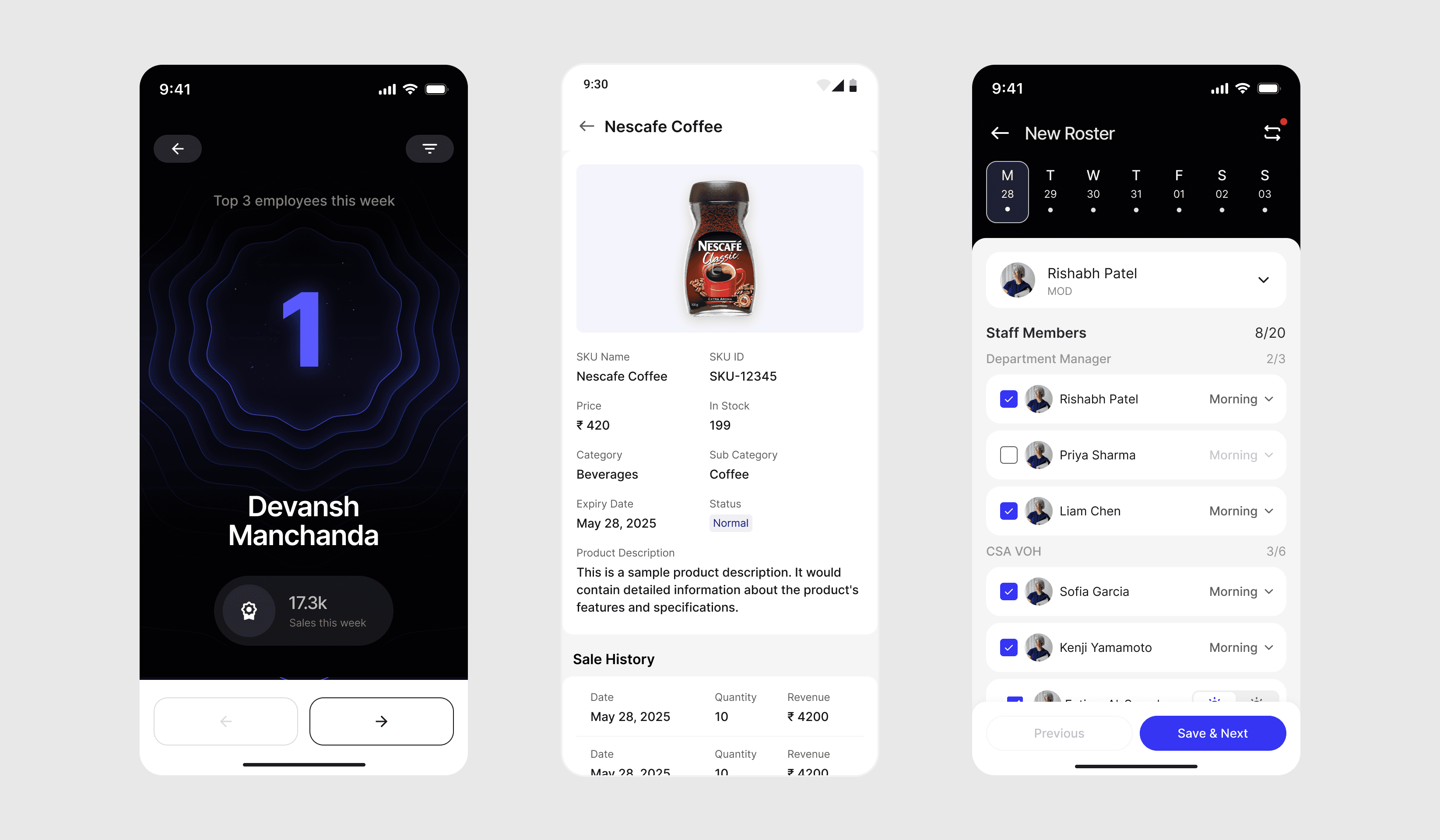
The Tasks and Task Detail screens simplify store execution by giving users a clear overview of all pending and assigned tasks with real-time status tags
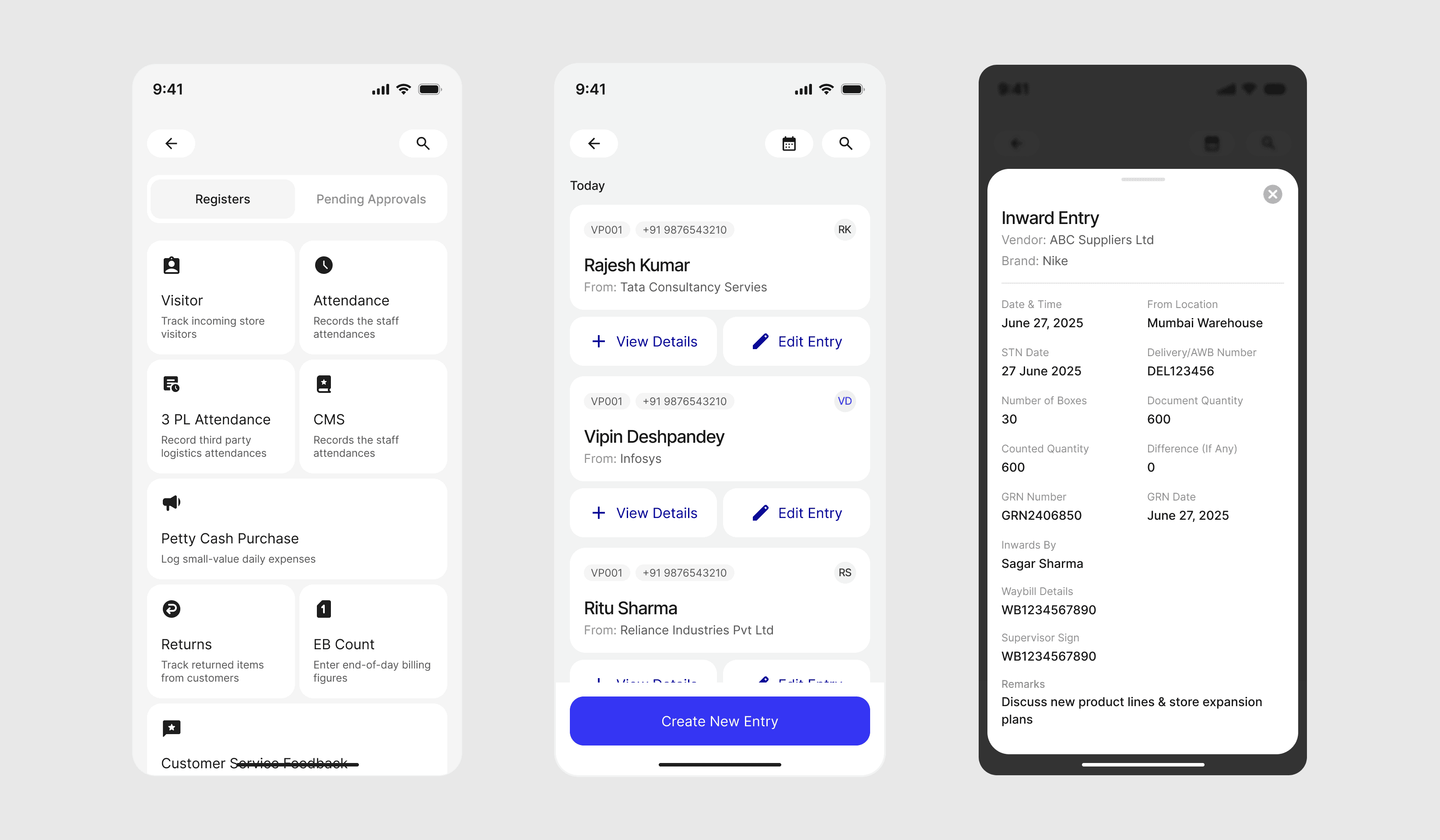
The Digital Registers screen centralizes all store record-keeping—attendance, petty cash, returns, inwards/outwards, and feedback. Together with inward entry tracking and a leaderboard that highlights top-performing staff, it promotes accuracy, accountability, and healthy competition across daily store operations.
We digitized inventory management to bring real-time stock visibility and reduce manual errors across stores. The staff rostering module streamlined scheduling and approvals, improving clarity and accountability. A leaderboard added healthy competition by recognizing top performers, boosting engagement and productivity on the floor.
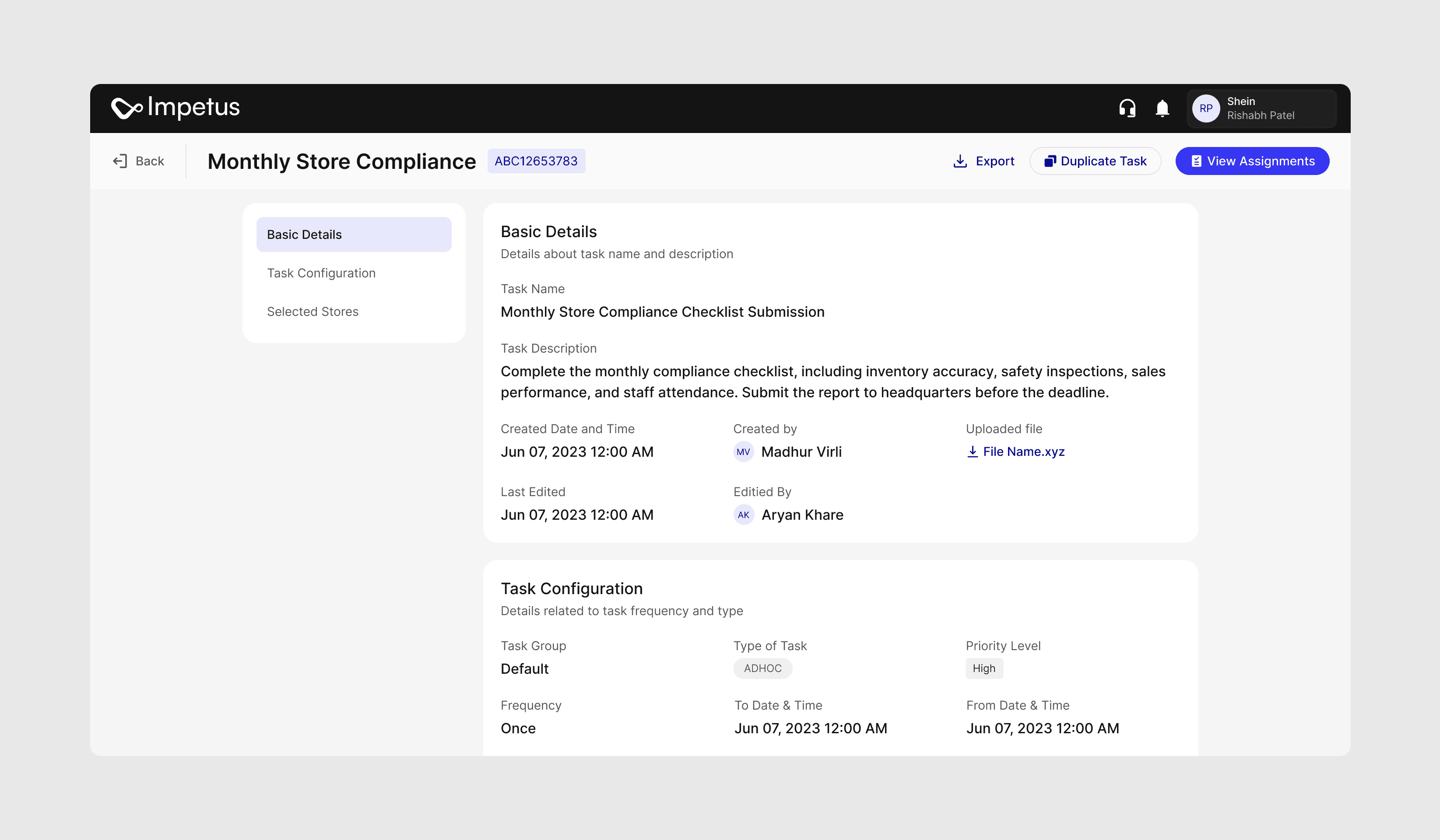
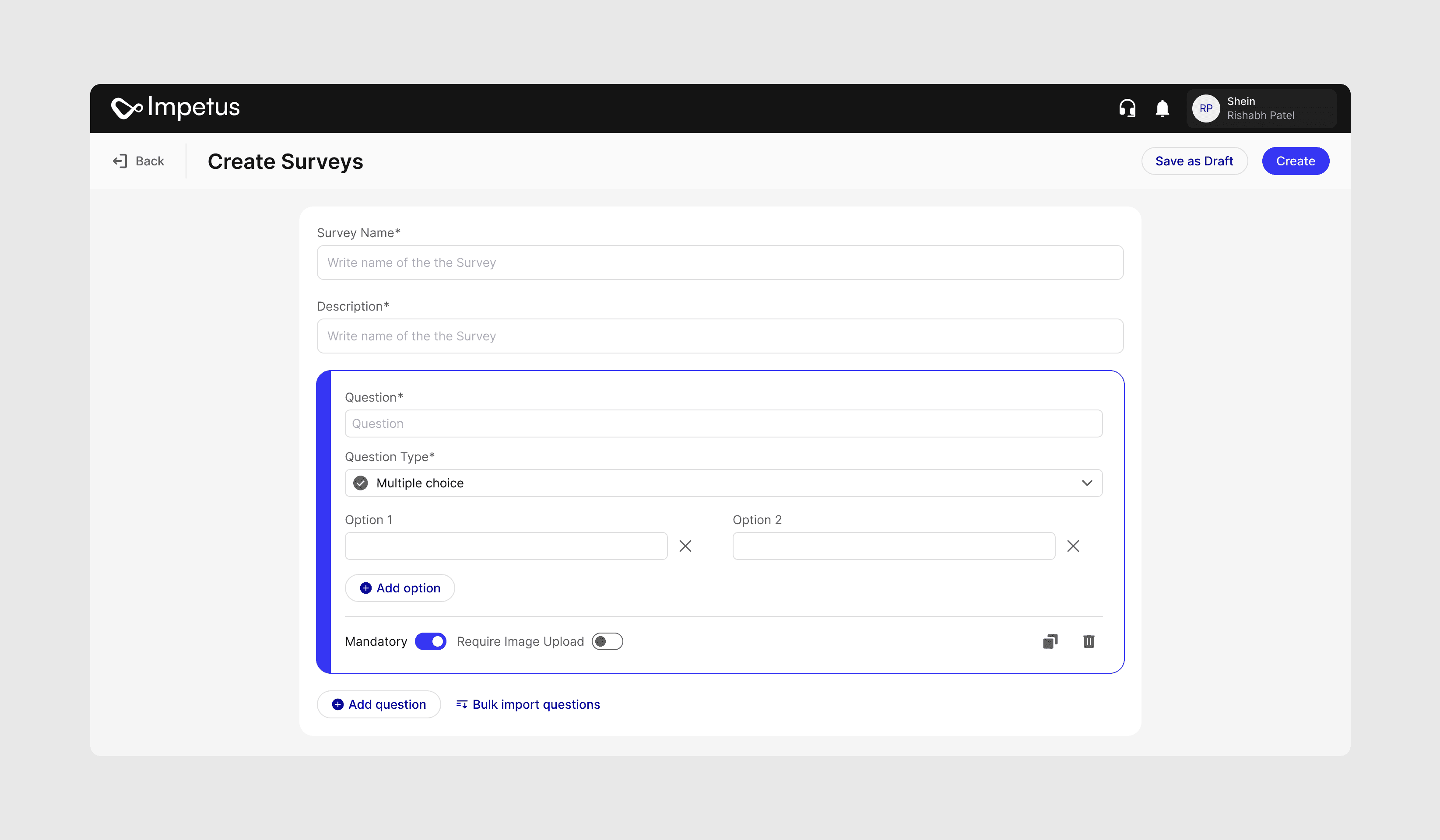
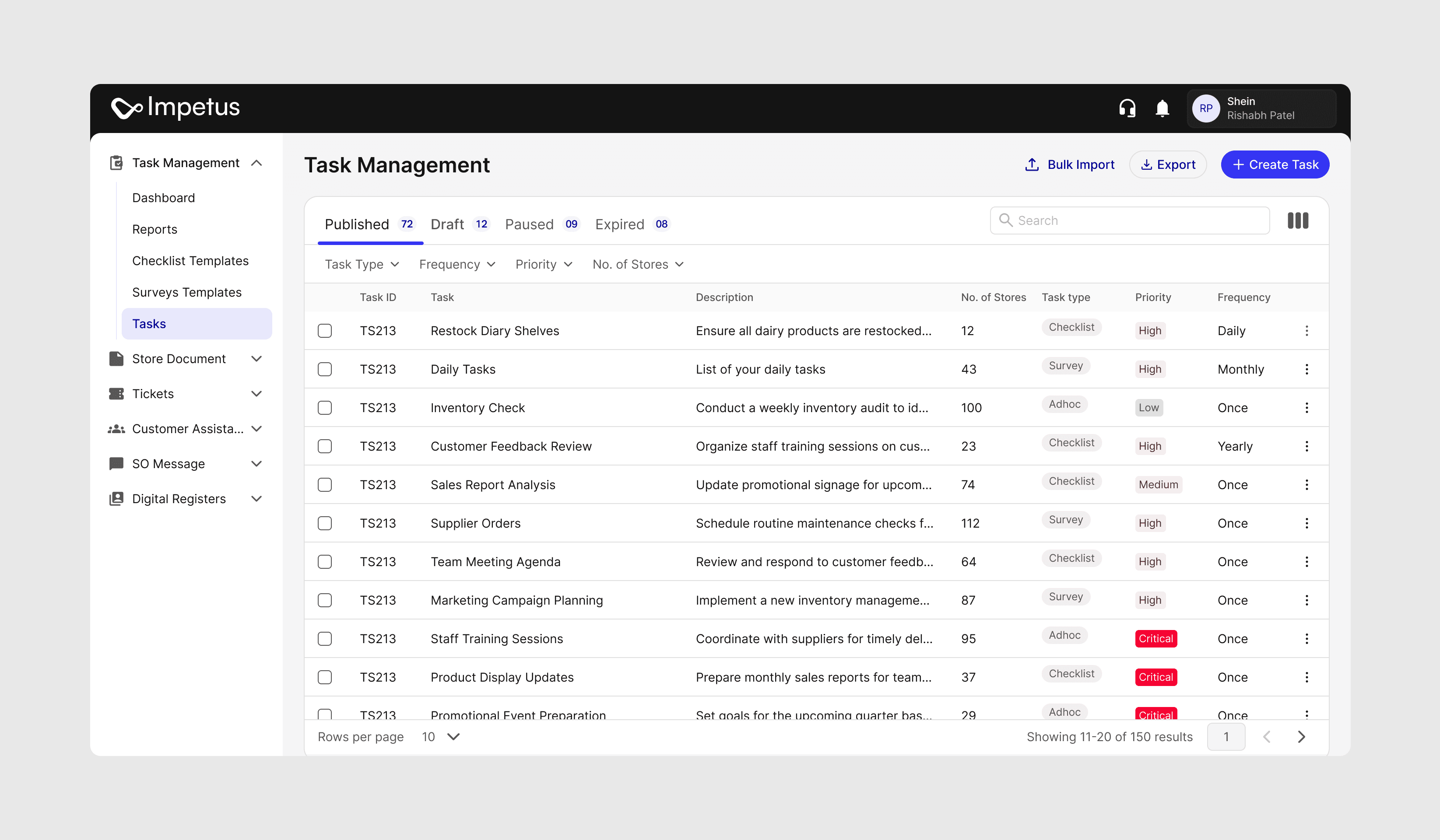
The Web Console serves as the control hub for the NOC and head office teams to create, assign, and monitor store tasks in real time. It enables centralized task creation, checklist and survey management, and live tracking across all stores ensuring standardized execution and clear visibility for leadership.
Measurable Impact

About the Project
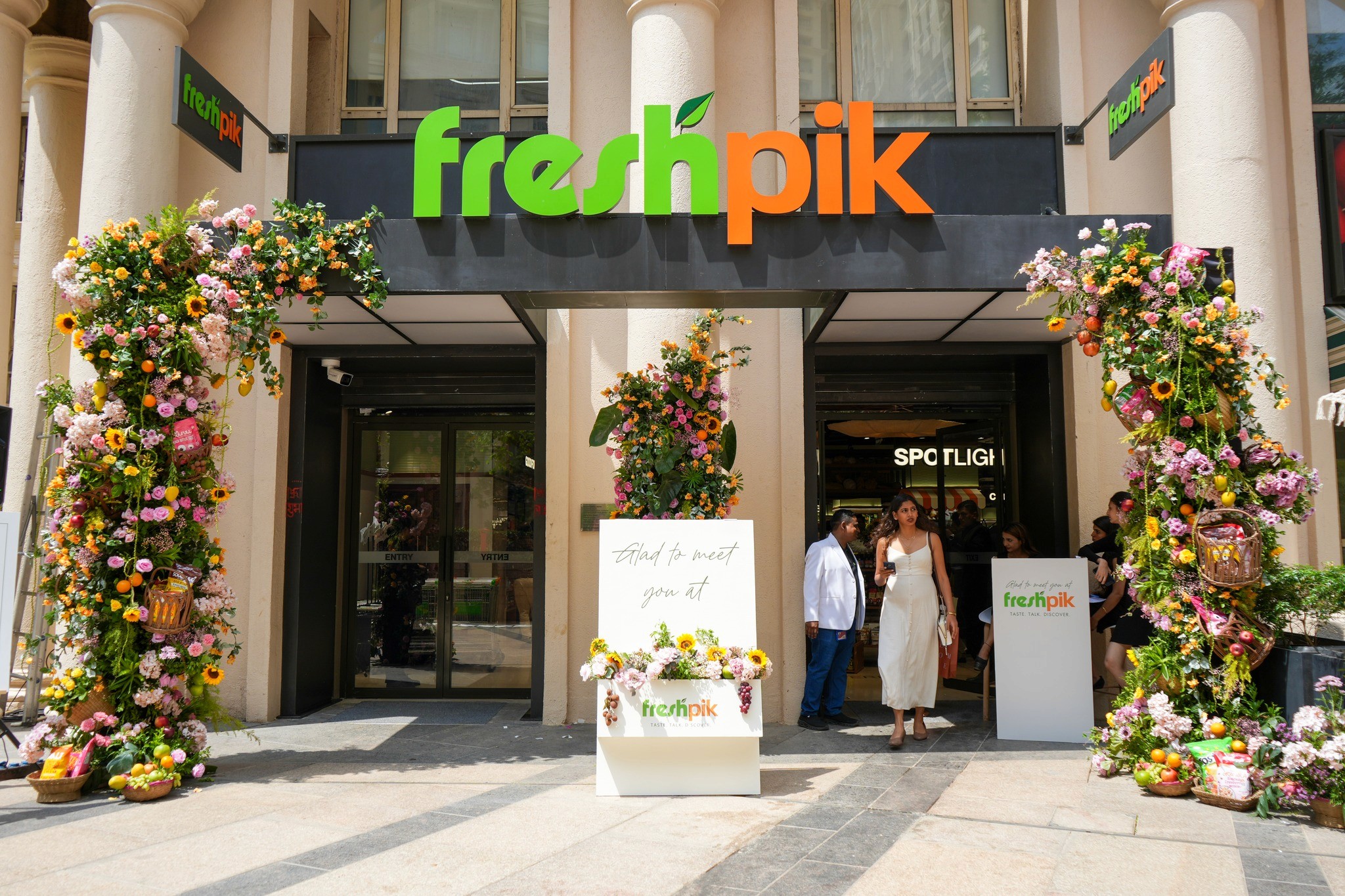
Freshpik is Reliance Retail’s premium food & grocery destination store. Targeting urban, upmarket customers who expect curated, high-quality, immersive food experiences.
Freshpik is Reliance Retail’s premium food & grocery destination store. Targeting urban, upmarket customers who expect curated, high-quality, immersive food experiences.
This is a solution built for large-format retail (like Reliance Freshpik, Smart Bazaar, and other chains). Its goal is to replace fragmented tools like emails, WhatsApp groups, manual diaries and PDFs with a single mobile + web solution for store staff, managers, and HQ teams.
This is a solution built for large-format retail (like Reliance Freshpik, Smart Bazaar, and other chains). Its goal is to replace fragmented tools like emails, WhatsApp groups, manual diaries and PDFs with a single mobile + web solution for store staff, managers, and HQ teams.
Goals that we wanted to achieve
Streamline Store Operations
Streamline Store Operations
Replace fragmented tools like Ask Parvez, StoreX, People First, and WhatsApp with one integrated system.
Improve Operational Efficiency & Compliance
Improve Operational Efficiency & Compliance
Digitize checklists, markdowns, and GRN processes to minimize human error.
Enable Real-Time Visibility for Leadership
Enable Real-Time Visibility for Leadership
Provide NHQ and regional managers with live dashboards for task status, store performance, and compliance.
Enhance Employee Productivity & Accountability
Enhance Employee Productivity & Accountability
Clarify ownership by assigning and tracking tasks digitally. Reduce wasted time on repetitive coordination.
What is happening in the Industry
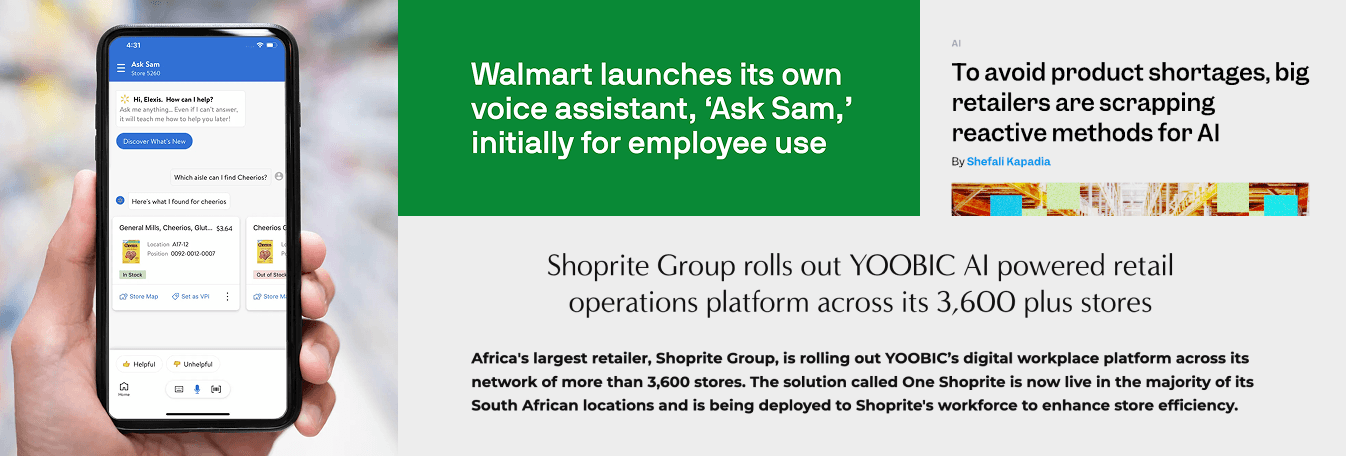
There's no mobile-first app that merges tasking, inventory, deliveries, and approvals made for fast-paced, high-SKU environments like grocery.
Retail store ops is rapidly shifting to mobile-first tools that simplify attendance and compliance, while driving tasking and workflow creation.
Large retailers around the world are digitizing store operations to cut costs, boost staff productivity, and improve customer experience.
Meet the Users
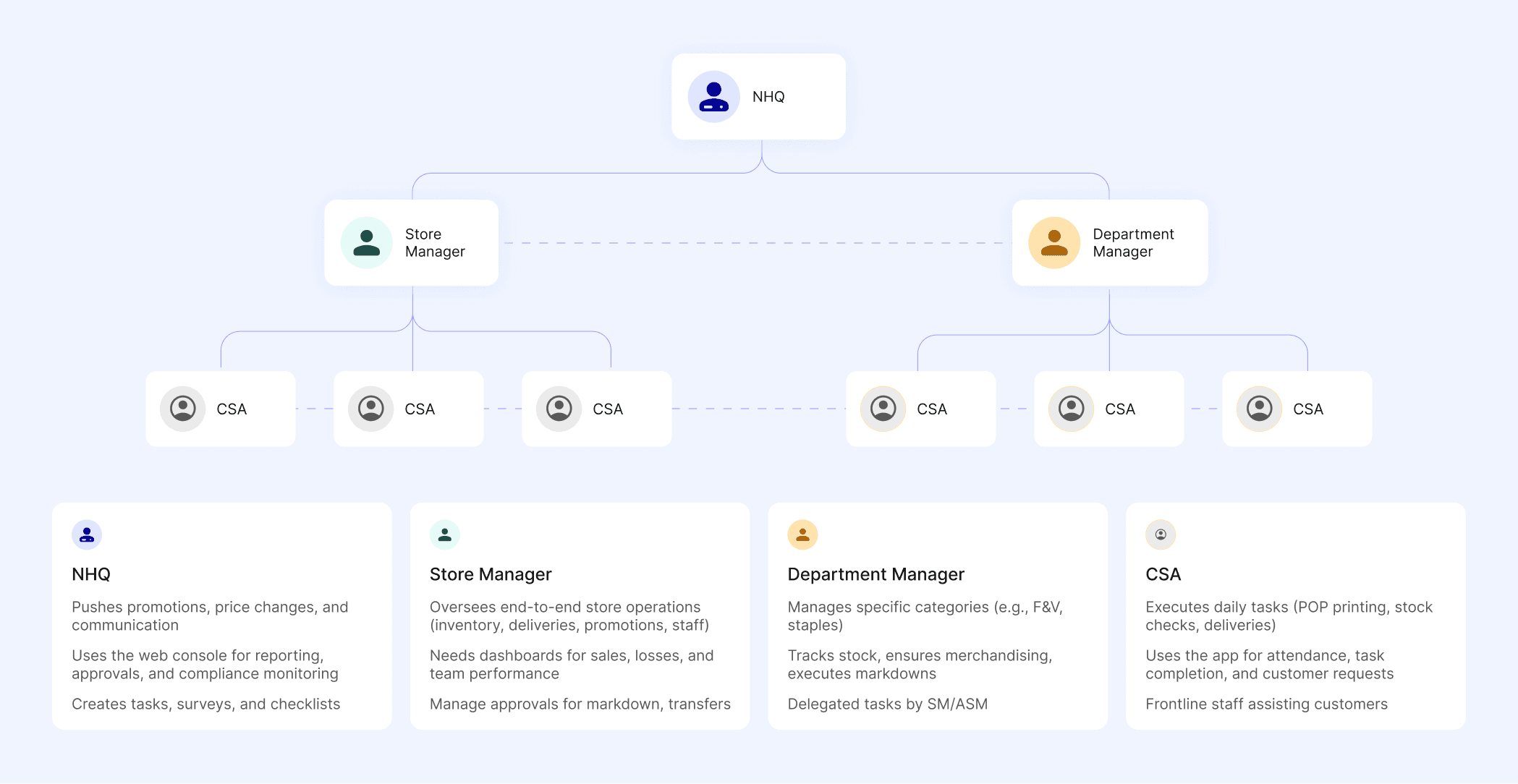
Asking the Users
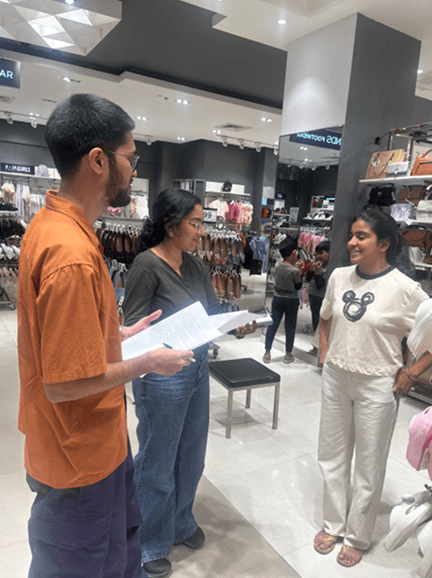
Workshops & UXR: Conducted field visits and interviews with store managers in Pune, Thane & Mumbai.
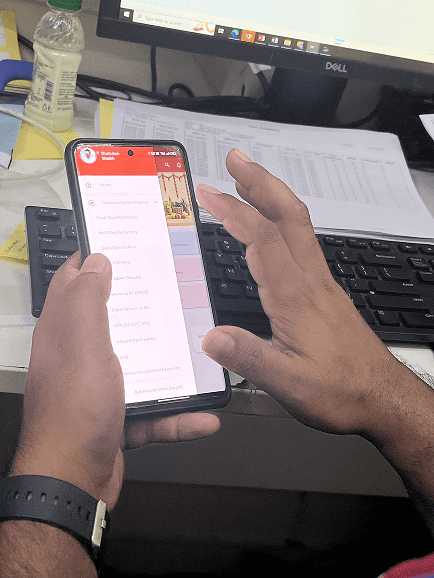
Shadowing & testing current tools in day-to-day usage, to document frictions as a baseline for redesign.
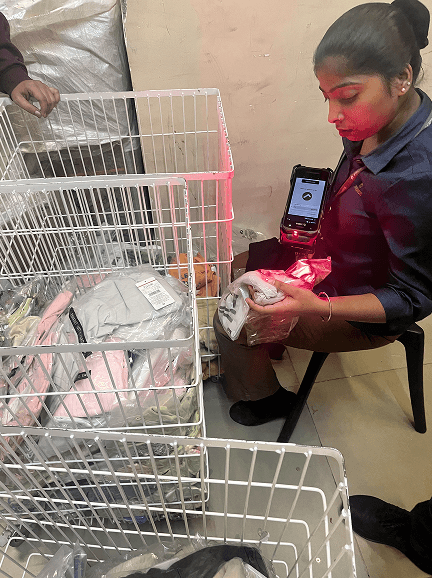
CSAs spent hours counting inventory, fixing POS, and chasing staff on WhatsApp instead of focusing on sales.
Current System
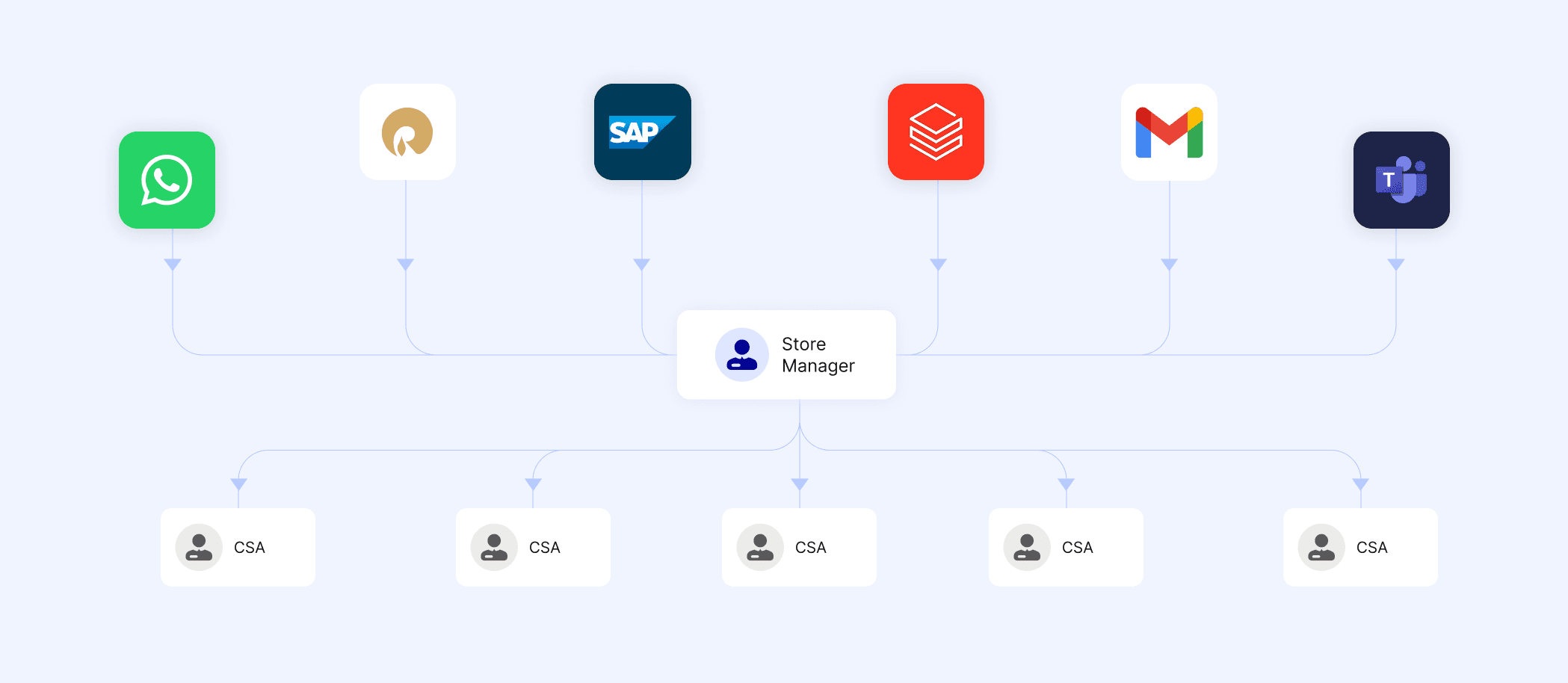
Problems Identified in the Current Systems
Problems Identified in the Current Systems
Slow, unreliable app
Slow, unreliable app
Ask Parvez login/upload delays; tasks failing with poor network
No structured task tracking
No structured task tracking
Staff rely on WhatsApp or diaries instead of a centralized system
Slow GRN & inventory workflow
Slow GRN & inventory workflow
Unorganized article lists, manual counting for CPC, no real-time sync
Attendance & HR issues
Attendance & HR issues
People First app errors prevented clock-ins; approvals/manual slips added overhead
Promotions & markdowns
Promotions & markdowns
Emails + POS entry; markdown approvals requiring multiple steps and photo uploads
POS disruptions
POS disruptions
Offline billing needed IT intervention with different hotkeys per system
What Business wants to fix
Operational inefficiency
Operational inefficiency
Store teams wasted hours on manual entries, redundant uploads, and fragmented apps
Lack of real-time visibility
Lack of real-time visibility
Inventory only updated at EOD, no central dashboards for tasks, compliance, or KPIs
Compliance errors
Compliance errors
Complex processes in promotions and markdowns led to stockouts, and wrong pricing
UX Challenges
UX Challenges
These UX challenges point to a need for simplification, reliability, and unification of workflows into one seamless platform.
These UX challenges point to a need for simplification, reliability, and unification of workflows into one seamless platform.

Photo uploads via email, break approvals with slips, and offline billing hotkeys increase friction

Dashboards and reports are mostly for SMs, other staff lack visibility into performance and goals

From store manager to CSA everyone should leverage AI into their day to day workflows

Fragmented Experience – Users switch between multiple apps causing confusion and inefficiency
Bringing AI to Everyone
The business advised us to explore how AI could be embedded into the day-to-day workflows of store employees to drive efficiency and reduce friction.

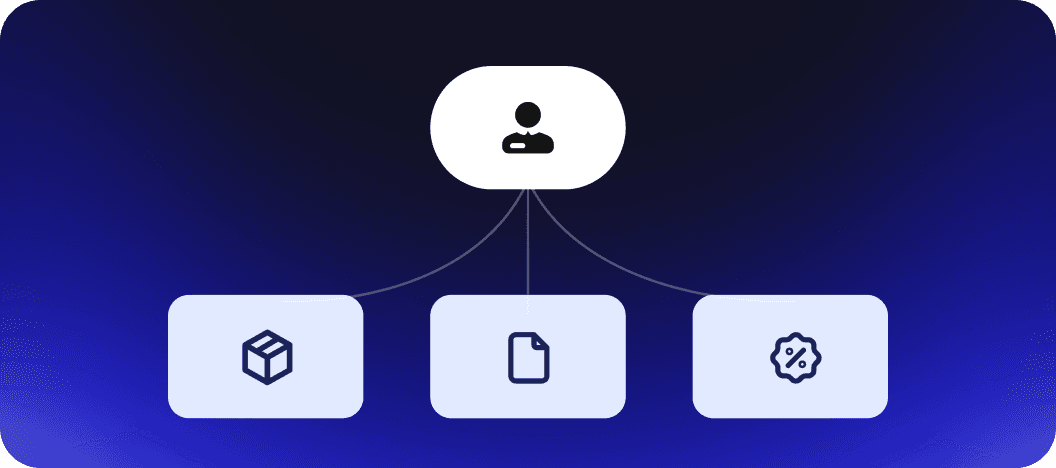

AI can act as a copilot for store staff helping them resolve queries instantly, prioritize tasks, and cut down on manual effort.
Task automation can auto-create tickets from delivery delays or inventory mismatches. Later it can track the progress or send alerts.
Computer vision can verify planogram compliance, shelf availability, and freshness of F&V during store walks.
AI Queue Management predicts peak times, suggests opening counters, and monitors live queues.
Computer Vision for POG & POP compliance verifies stock placement and merchandising through a scan.
Predictive AI for replenishment nudges staff on low-stock SKUs and auto-raises restock requests.
MVP Strategy & Core Feature Set



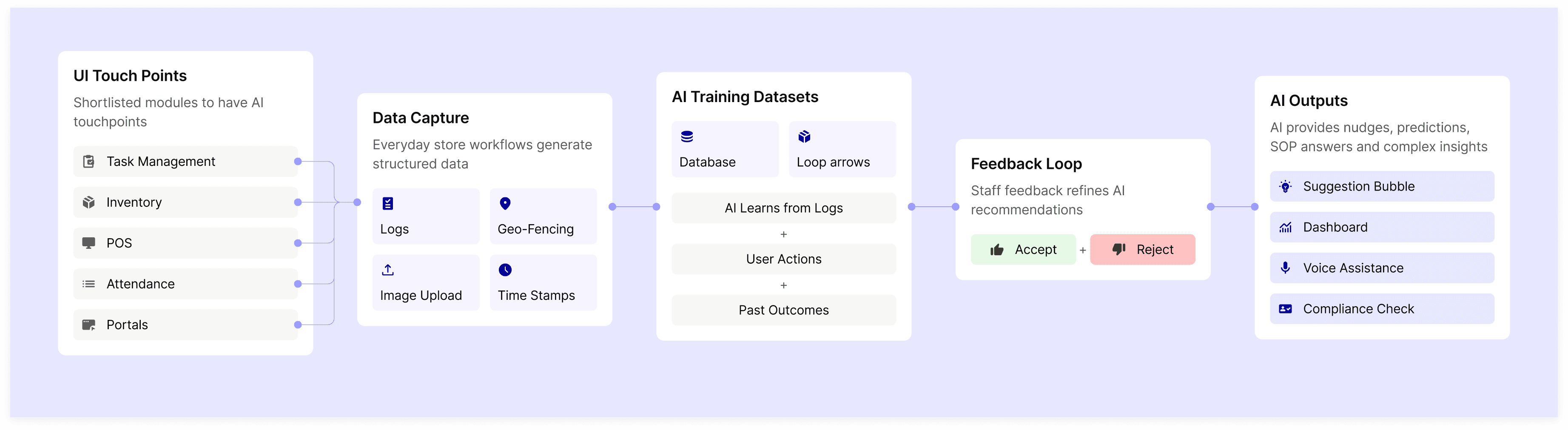
To ensure feasibility, I collaborated closely with the engineering team to validate which AI-driven features were technically achievable in the near term and which required phased implementation. We aligned on system dependencies, integration requirements, and backend readiness.
To ensure feasibility, I collaborated closely with the engineering team to validate which AI-driven features were technically achievable in the near term and which required phased implementation. We aligned on system dependencies, integration requirements, and backend readiness.
Driving Adoption Through Cross-Functional Collaboration
As the product designer, I collaborated closely with the PM team and Sales leadership to design an adoption strategy that not only encouraged store teams to embrace the new platform but also gave designers structured channels to collect continuous feedback.
As the product designer, I collaborated closely with the PM team and Sales leadership to design an adoption strategy that not only encouraged store teams to embrace the new platform but also gave designers structured channels to collect continuous feedback.

Pilot in 3 Stores – Start with three locations (different footfalls) across Freshpik and Smart Bazaar, focusing on high-impact modules like task management, attendance, and inventory.

Measure & Optimize – Track adoption metrics (completion rates, error reduction, usage) and share dashboards with NHQ and managers to fine-tune workflows.

Train & Champion – Deliver micro-learning modules and appoint store champions to lead adoption. Attend onboarding sessions to understand friction during adoptions
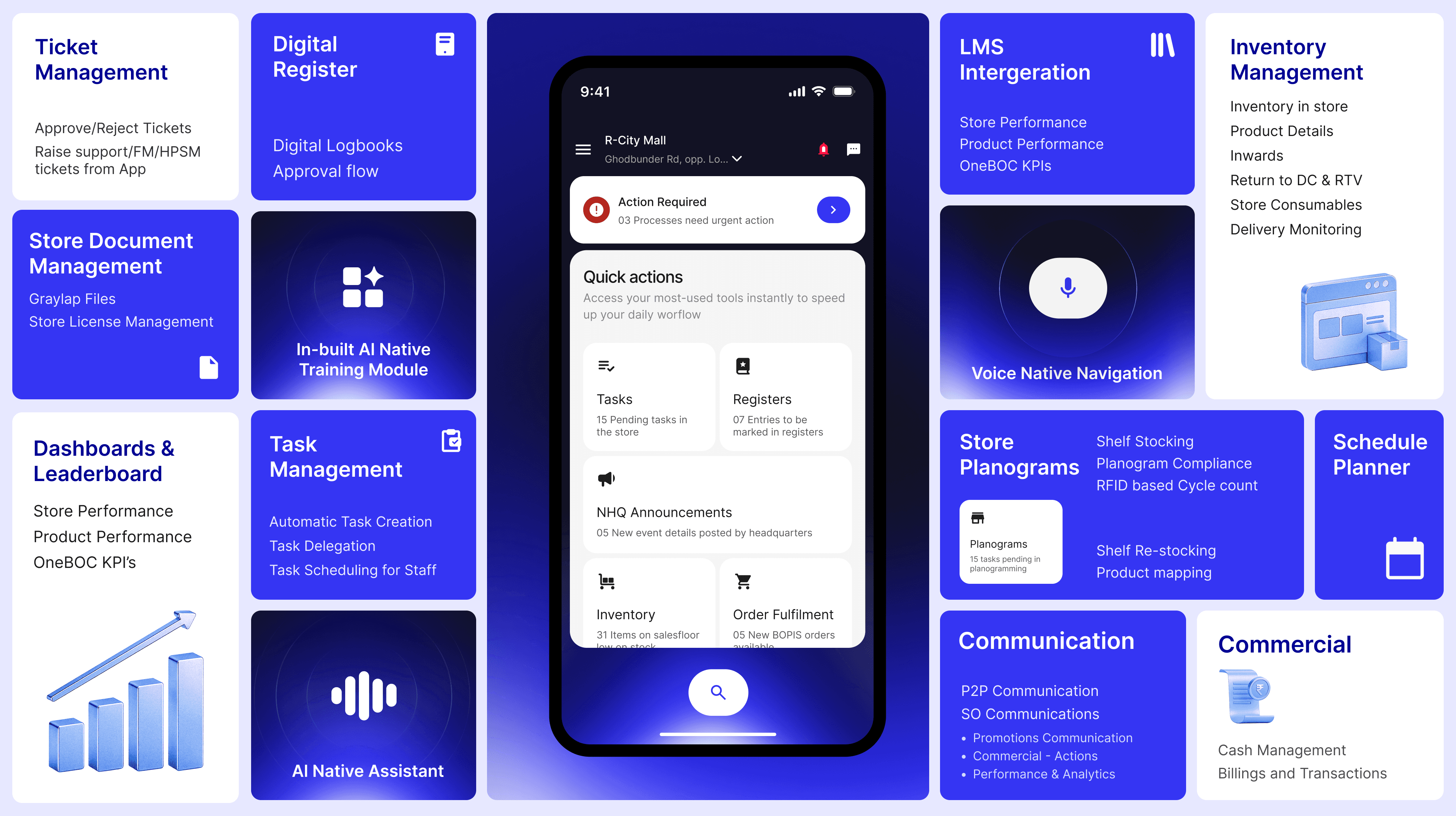
Feature Chart
Crafting the right Design System
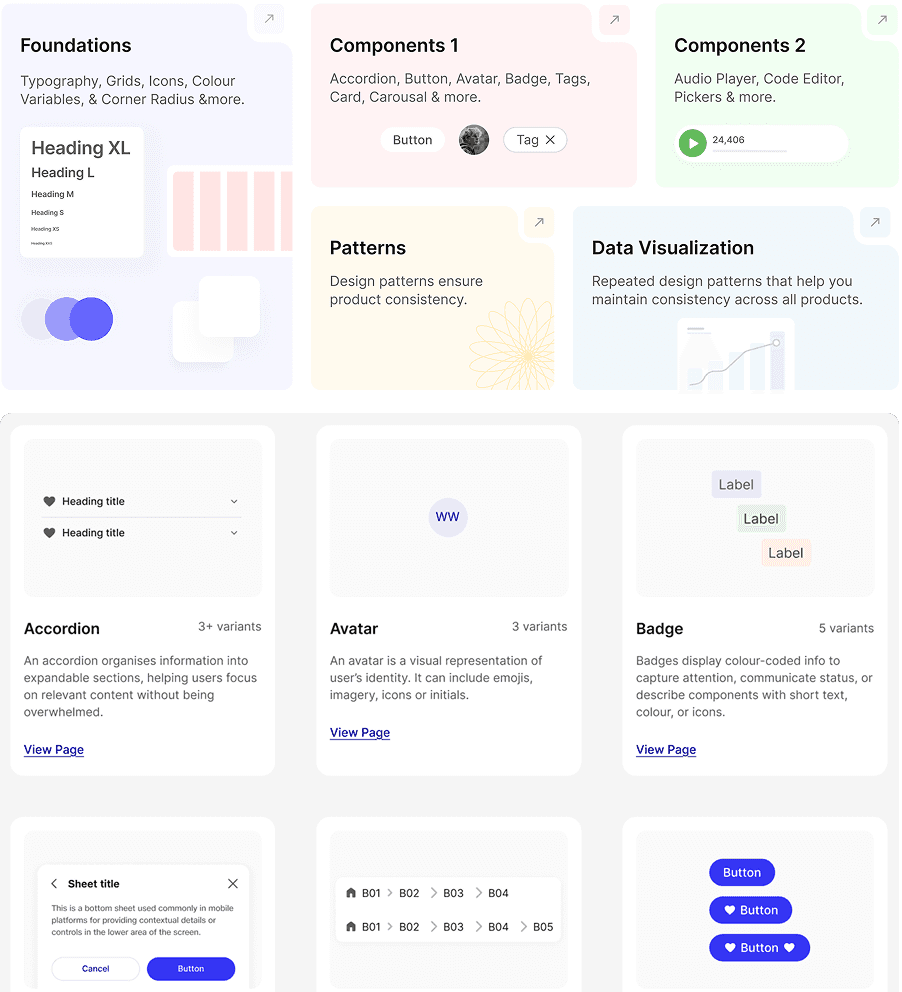
At the start, we experimented with building our own design system, but quickly realized that Novus was more SaaS-friendly, structured, and more suitable for web interfaces. However, we also wanted the app to feel fresh, young, modern, and new-age, which led us to explore Material UI for its fluid interactions and container aesthetics.
At the start, we experimented with building our own design system, but quickly realized that Novus was more SaaS-friendly, structured, and more suitable for web interfaces. However, we also wanted the app to feel fresh, young, modern, and new-age, which led us to explore Material UI for its fluid interactions and container aesthetics.
Since this was a Reliance app, we could not directly adopt Material UI. Instead, we proposed a hybrid custom DS combining tokens and atoms from Novus with the aesthetics and interaction patterns of Material.
What we did
We designed the app as a super-app, combining all store operations tasks, inventory, attendance, and reports into one interface.
What didn’t work
During rapid prototyping, users found it cluttered, overwhelming, and tiring to navigate across multiple modules for simple actions.
What we did to resolve
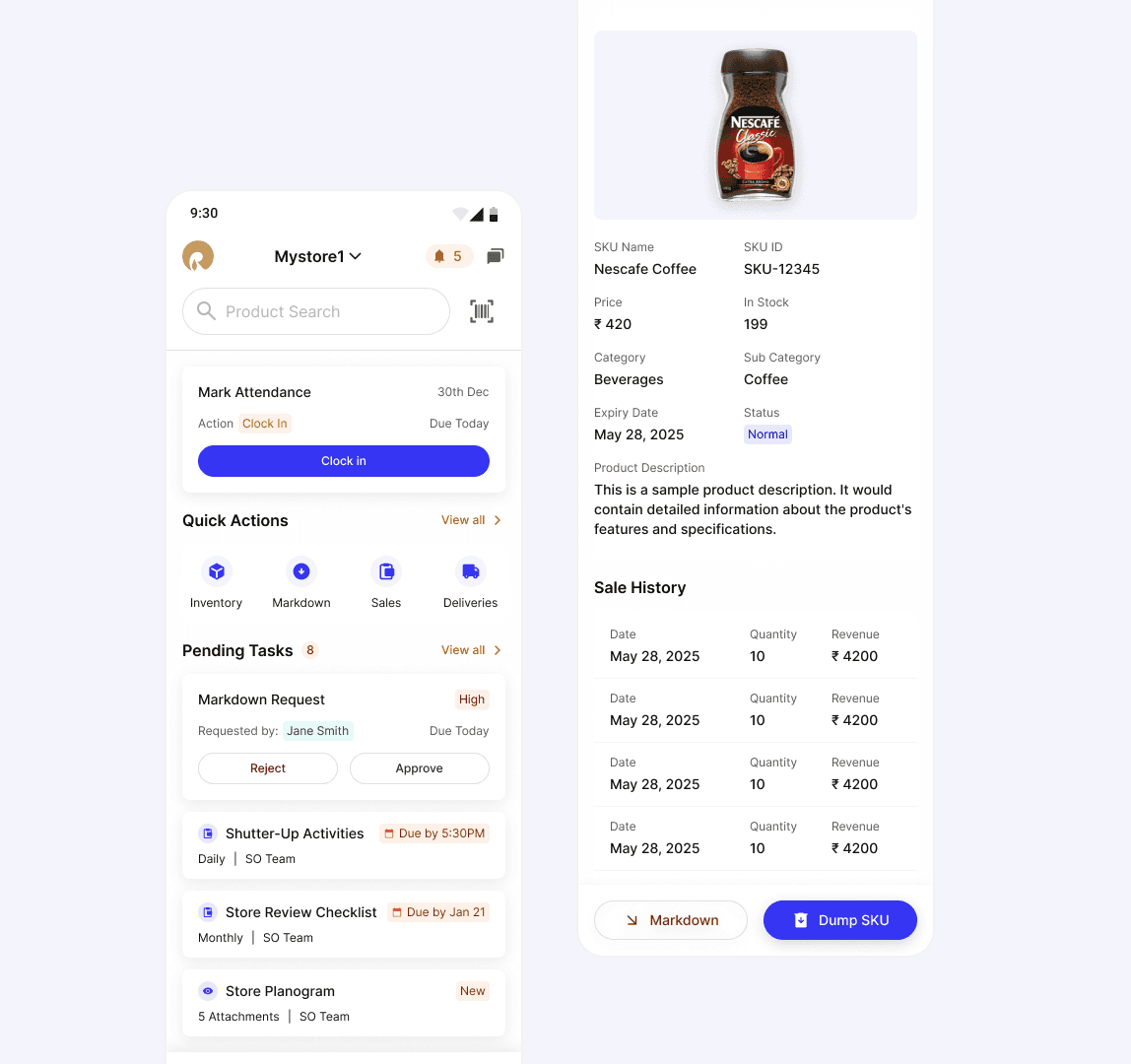
We shifted to an insight-driven design, surfacing key tasks, alerts, and communications upfront. This made the app action-oriented.
Asking users how the product feels
We gathered feedback from store managers and staff to understand how the product performs in real conditions. Users praised the clean, intuitive interface and insight-first design that reduced navigation time. They highlighted the need for offline GRN capabilities to handle poor connectivity in some locations.
Another key suggestion was adding barcode scanning for instant stock count checks on the floor.
Both improvements are part of our upcoming roadmap to make store operations faster, seamless, and more reliable
Measurable Impact
Welcome to Pulse Point App
We redesigned the home screen to be insight-first, surfacing key actions and alerts upfront for quick decision-making. This reduced navigation effort and mental load, turning the app into a focused control center for daily store operations.
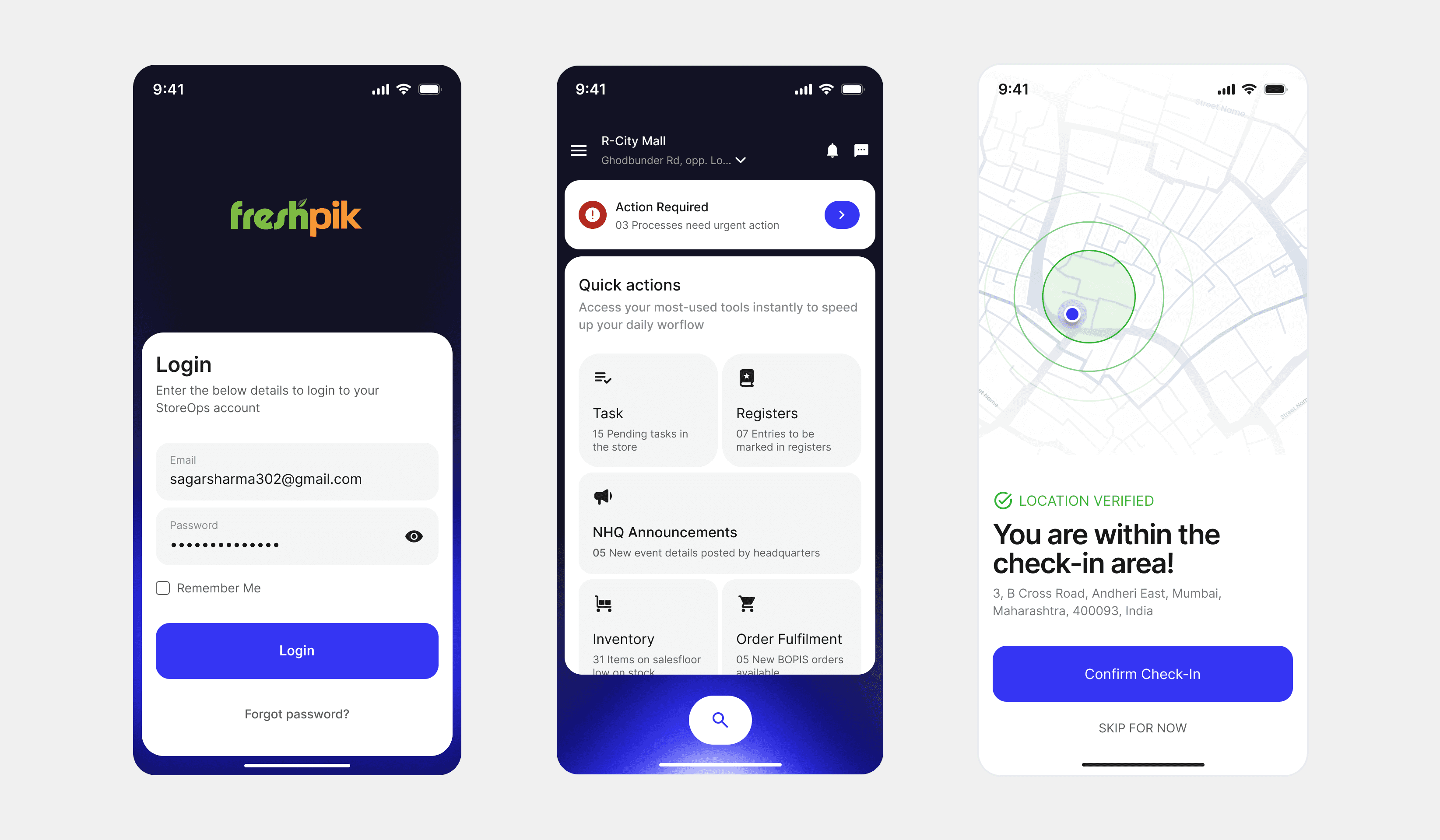
We introduced a multilingual AI voice assistant to help users access insights and perform actions effortlessly through natural speech. This removed language and navigation barriers, allowing store staff to get answers or complete tasks hands-free and instantly, even during busy operations.
The Tasks and Task Detail screens simplify store execution by giving users a clear overview of all pending and assigned tasks with real-time status tags
The Digital Registers screen centralizes all store record-keeping—attendance, petty cash, returns, inwards/outwards, and feedback. Together with inward entry tracking and a leaderboard that highlights top-performing staff, it promotes accuracy, accountability, and healthy competition across daily store operations.
We digitized inventory management to bring real-time stock visibility and reduce manual errors across stores. The staff rostering module streamlined scheduling and approvals, improving clarity and accountability. A leaderboard added healthy competition by recognizing top performers, boosting engagement and productivity on the floor.
The Web Console serves as the control hub for the NOC and head office teams to create, assign, and monitor store tasks in real time. It enables centralized task creation, checklist and survey management, and live tracking across all stores ensuring standardized execution and clear visibility for leadership.
Welcome to Pulse Point App
We redesigned the home screen to be insight-first, surfacing key actions and alerts upfront for quick decision-making. This reduced navigation effort and mental load, turning the app into a focused control center for daily store operations.
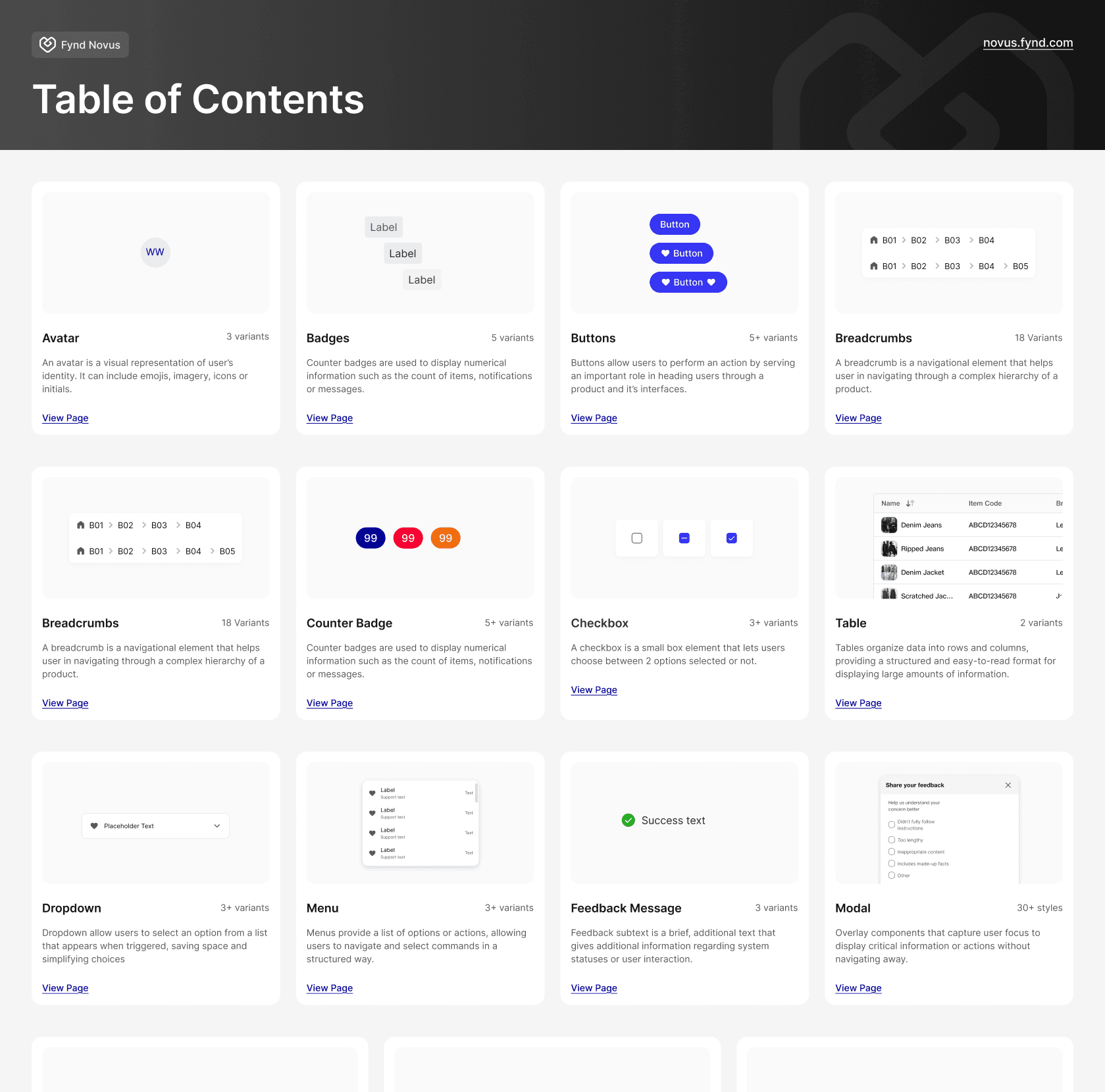
Using Novus DS System
The Novus Design System is Fynd’s native design system made for creating consistent, user-friendly interfaces. It emphasizes clear, modern, and empathetic elements, ensuring every interaction is trustworthy, direct, and supportive also guiding users effortlessly through digital experiences.

Measurable Impact
About the Project
Freshpik is Reliance Retail’s premium food & grocery destination store. Targeting urban, upmarket customers who expect curated, high-quality, immersive food experiences.
This is a solution built for large-format retail (like Reliance Freshpik, Smart Bazaar, and other chains). Its goal is to replace fragmented tools like emails, WhatsApp groups, manual diaries and PDFs with a single mobile + web solution for store staff, managers, and HQ teams.
What is happening in the Industry
There's no mobile-first app that merges tasking, inventory, deliveries, and approvals made for fast-paced, high-SKU environments like grocery.
Retail store ops is rapidly shifting to mobile-first tools that simplify attendance and compliance, while driving tasking and workflow creation.
Large retailers around the world are digitizing store operations to cut costs, boost staff productivity, and improve customer experience.
Meet the Users
Asking the Users
Workshops & UXR: Conducted field visits and interviews with store managers in Pune, Thane & Mumbai.
Shadowing & testing current tools in day-to-day usage, to document frictions as a baseline for redesign.
CSAs spent hours counting inventory, fixing POS, and chasing staff on WhatsApp instead of focusing on sales.
Current System
Problems Identified in the Current Systems
Slow, unreliable app
Ask Parvez login/upload delays; tasks failing with poor network
No structured task tracking
Staff rely on WhatsApp or diaries instead of a centralized system
Slow GRN & inventory workflow
Unorganized article lists, manual counting for CPC, no real-time sync
Attendance & HR issues
People First app errors prevented clock-ins; approvals/manual slips added overhead
Promotions & markdowns
Emails + POS entry; markdown approvals requiring multiple steps and photo uploads
POS disruptions
Offline billing needed IT intervention with different hotkeys per system
What Business wants to fix
Operational inefficiency
Store teams wasted hours on manual entries, redundant uploads, and fragmented apps
Lack of real-time visibility
Inventory only updated at EOD, no central dashboards for tasks, compliance, or KPIs
Compliance errors
Complex processes in promotions and markdowns led to stockouts, and wrong pricing
Bringing AI to Everyone
The business advised us to explore how AI could be embedded into the day-to-day workflows of store employees to drive efficiency and reduce friction.
AI can act as a copilot for store staff helping them resolve queries instantly, prioritize tasks, and cut down on manual effort.
Task automation can auto-create tickets from delivery delays or inventory mismatches. Later it can track the progress or send alerts.
Computer vision can verify planogram compliance, shelf availability, and freshness of F&V during store walks.
AI Queue Management predicts peak times, suggests opening counters, and monitors live queues.
Computer Vision for POG & POP compliance verifies stock placement and merchandising through a scan.
Predictive AI for replenishment nudges staff on low-stock SKUs and auto-raises restock requests.
MVP Strategy & Core Feature Set
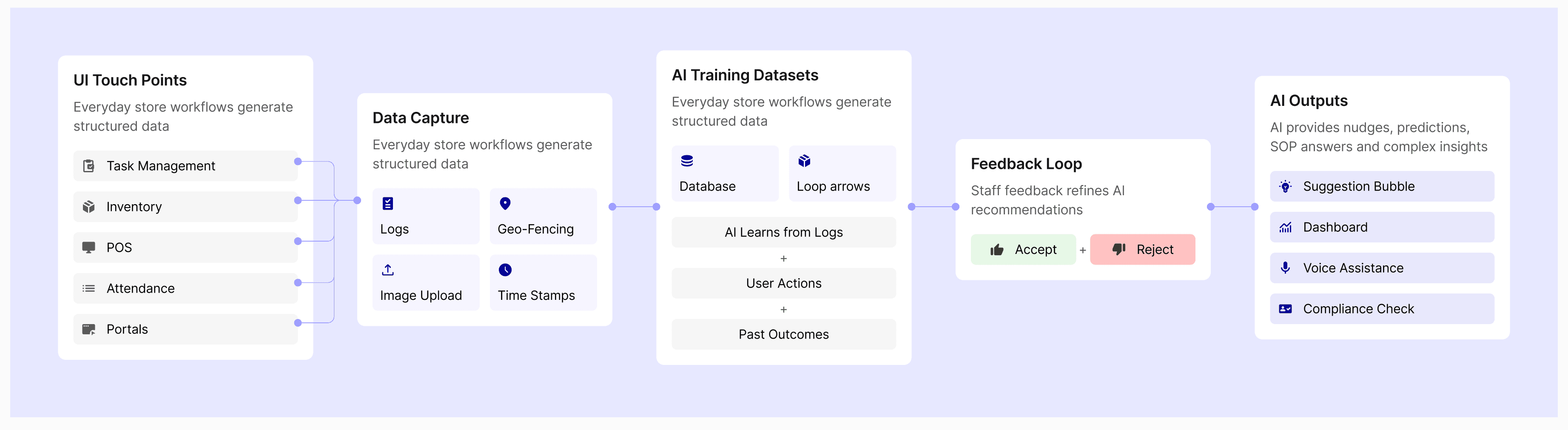
To ensure feasibility, I collaborated closely with the engineering team to validate which AI-driven features were technically achievable in the near term and which required phased implementation. We aligned on system dependencies, integration requirements, and backend readiness.
Driving Adoption Through Cross-Functional Collaboration
As the product designer, I collaborated closely with the PM team and Sales leadership to design an adoption strategy that not only encouraged store teams to embrace the new platform but also gave designers structured channels to collect continuous feedback.
Pilot in 3 Stores – Start with three locations (different footfalls) across Freshpik and Smart Bazaar, focusing on high-impact modules like task management, attendance, and inventory.
Measure & Optimize – Track adoption metrics (completion rates, error reduction, usage) and share dashboards with NHQ and managers to fine-tune workflows.
Train & Champion – Deliver micro-learning modules and appoint store champions to lead adoption. Attend onboarding sessions to understand friction during adoptions
Feature Chart
Crafting the right Design System
At the start, we experimented with building our own design system, but quickly realized that Novus was more SaaS-friendly, structured, and more suitable for web interfaces. However, we also wanted the app to feel fresh, young, modern, and new-age, which led us to explore Material UI for its fluid interactions and container aesthetics.
Since this was a Reliance app, we could not directly adopt Material UI. Instead, we proposed a hybrid custom DS combining tokens and atoms from Novus with the aesthetics and interaction patterns of Material.
What we did
We designed the app as a super-app, combining all store operations tasks, inventory, attendance, and reports into one interface.
What didn’t work
During rapid prototyping, users found it cluttered, overwhelming, and tiring to navigate across multiple modules for simple actions.
What we did to resolve
We shifted to an insight-driven design, surfacing key tasks, alerts, and communications upfront. This made the app action-oriented.
Asking users how the product feels
We gathered feedback from store managers and staff to understand how the product performs in real conditions. Users praised the clean, intuitive interface and insight-first design that reduced navigation time. They highlighted the need for offline GRN capabilities to handle poor connectivity in some locations.
Another key suggestion was adding barcode scanning for instant stock count checks on the floor.
Both improvements are part of our upcoming roadmap to make store operations faster, seamless, and more reliable
Measurable Impact
Pulse Point: Store management platform for Freshpik for bringing calm in chaotic workflows
My Role
Worked as a Product designer with 2 of my teammates. Later lead the project as a design manager
Collaborators
Product Owner, Developers, QA Team and Content Writer
Design Timeline
3 Month
(Dec'24 - Feb'25)